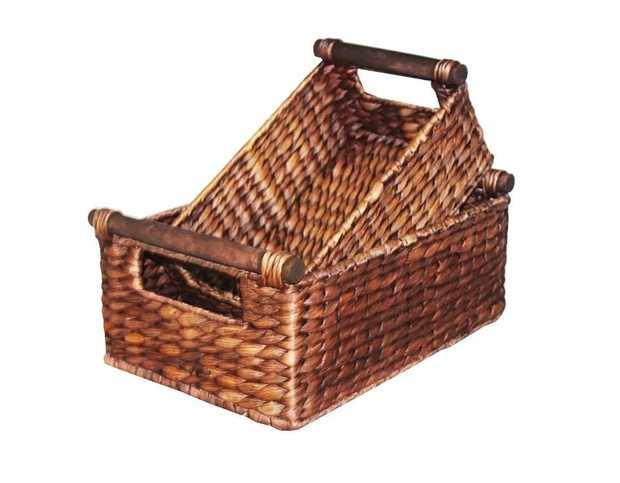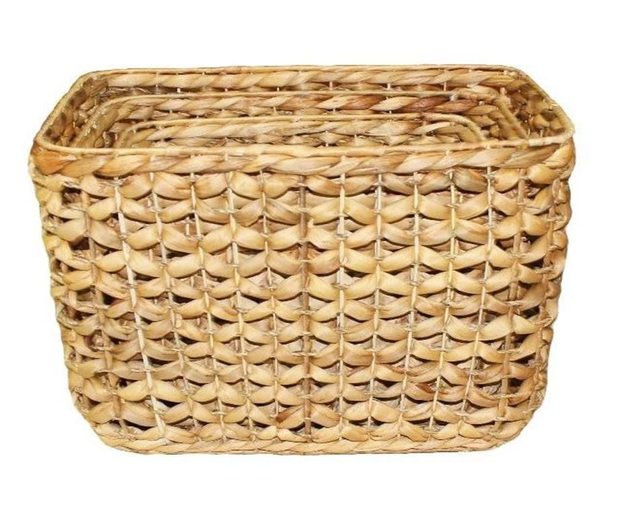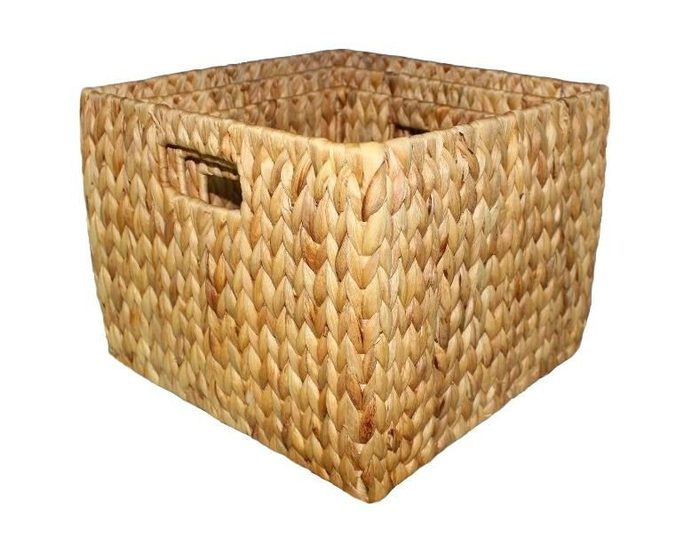
Placeholder hero image. Side-by-side comparison photograph to replace this shot.
Water hyacinth and rattan sit at opposite ends of the natural-fibre spectrum. Water hyacinth is soft, chunky, cheap, and fast. Rattan is rigid, refined, expensive, and slow. Buyers who understand the gap use both in the same programme; buyers who do not usually pick the wrong one for the SKU and pay for it in the second sample round.
Written for wholesale buyers, e-commerce category managers, and private-label programmes deciding whether the next basket range should be soft cottage weave or structured pole work. Covers what each fibre actually is, where each holds retail shelf, the 30 to 60 percent price gap, the 15 to 30 day lead-time gap, and the container economics behind both.
What each fibre actually is
Water hyacinth (lục bình in Vietnamese) is a floating aquatic weed harvested from the Mekong Delta's rivers and canals. The plant regrows in six to eight weeks. Stems are cut close to the waterline, sun-dried into long tan cables for three to five weeks, then woven by hand over a shape-holding frame. The finished basket is soft to touch, warm-toned, breathes well, and stands upright empty on the strength of the fibre alone.
Rattan is a climbing palm vine. It is not a grass, not a bamboo, not a weed. It grows in forest understorey across Southeast Asia; Vietnam produces meaningful volume, but Indonesia and the Philippines lead regional supply. Rattan poles are harvested from the forest, stripped of thorns and outer bark, steamed to allow bending, straightened, cut to length, and then either woven flat (cane) or used as full poles for chair frames, planter walls, and structural pieces. The finished piece is hard, glossy, and structural; it can hold weight the way water hyacinth cannot.
The material difference cascades into everything downstream: harvest cycle, price, lead time, weave technique, retail use case, and container economics. Two fibres, two completely different production systems, one shared aesthetic keyword ("natural") that makes buyers confuse them at the sourcing stage.
The comparison at a glance
| Attribute | Water hyacinth (lục bình) | Rattan (mây) |
|---|---|---|
| Source | Aquatic weed, Mekong Delta | Palm vine, forest understorey |
| Fibre character | Soft, warm, springy, breathes | Hard, glossy, structural, rigid |
| Weave technique | Woven over frame | Woven cane or bent pole construction |
| Natural colour | Warm tan, honey brown | Pale cream, deepens to honey with age |
| Holds shape best in | Storage, laundry, hampers, floor pieces | Chair frames, tables, structural planters, cane panels |
| Typical FOB price per unit | Baseline | +30 to +60 percent |
| Standard lead time | 45 to 60 days | 60 to 90 days |
| Finish options | Natural, brown wash, black wash, white wash | Natural, stained, lacquered, painted |
| Container fit (40'HQ) | 2,200 to 3,000 pieces nested | 1,200 to 1,800 pieces (rigid, low nesting) |
| Weight per equivalent piece | Light | Medium (pole frames add mass) |
Where water hyacinth wins
Water hyacinth wins any category where the piece has to be soft to the touch, light in the hand, affordable per unit, and quick to produce. In practical retail terms, that covers a very large share of the natural-fibre basket market.
- Volume storage programmes. Set-of-2, set-of-3, and set-of-4 nested storage baskets ship 2,200 to 3,000 pieces per 40'HQ. On a landed unit cost basis, water hyacinth is difficult to beat once the buyer commits to a container-load programme.
- Laundry hampers. Fuller fibre stands upright when full. Breathes so damp cotton does not stagnate. Lightweight when lifted. Rattan laundry hampers exist but cost roughly double for equivalent capacity.
- Nursery and children's storage. Soft edges, no splinters, non-toxic anti-mould treatment. Rattan works here too but the price point pushes retail out of the mass-market bracket.
- Gift hampers and seasonal SKUs. Takes wash finishes (brown, black, white) cleanly. Fast enough lead time to slot into a peak-season programme booked in Q1 for Q4 delivery.
- Cachepot sleeves and planter baskets. Water hyacinth tolerates incidental indoor humidity better than rattan, which can develop hairline cracks in the finish over long-term contact with wet pots.
The ceiling for water hyacinth is structural. Any SKU that has to carry seat load, tension, or heavy vertical weight without a metal frame belongs to rattan. Any SKU where the design intent is visible cane pattern or bent-pole silhouette also belongs to rattan.
Where rattan wins
Rattan wins the categories where structure is the design. Water hyacinth can imitate the look of rattan visually from three metres away, but it cannot hold seat load, span a chair back, or read as "designed" in the way bent-pole rattan does.
- Furniture and furniture accents. Chair frames, side tables, benches, headboards, planter stands. Steamed and bent rattan poles form the structural skeleton that no other natural fibre can replicate at retail price.
- Rigid planters and heavy storage. Rattan wall thickness carries weight and holds shape over years of loading and unloading. Water hyacinth planter baskets are cachepots (decorative sleeves around a real plastic pot); rattan planters can be the pot.
- Pieces where visible weave pattern is the design. Rattan cane webbing (the diamond or hexagon pattern seen on chair backs and cabinet fronts) is a specific, recognisable finish that reads as premium. Water hyacinth cannot produce that pattern; the fibre is too thick and too soft.
- Premium home décor programmes. Buyers stocking above the mass-market price point often want the rattan finish because it signals design intent and craft heritage in a way softer fibres do not.
- Lighting accents. Rattan lampshades and pendant fixtures hold shape when hung and do not sag or deform over time under the weight of a socket assembly.
Rattan is not the right fibre for volume utility programmes. If the P&L target is high-turn storage baskets moving at low margin, rattan pushes the landed cost past the price point the shelf will support.
The honest price and lead-time gap
Rattan costs 30 to 60 percent more per equivalent unit than water hyacinth. The gap is real, structural, and unlikely to close.
Three drivers. First, raw material scarcity. Rattan is harvested from forest, not farmed and not weed. Sustainable harvesting cycles are five to seven years per stand, whereas water hyacinth regrows in six to eight weeks. Second, pole preparation. Before weaving even starts, rattan poles need cleaning, steaming, straightening, cutting, and (for cane) splitting. That adds two to three weeks of labour before the first weave. Third, weaving skill floor. Rattan work at export quality requires a smaller pool of specialised weavers, particularly for bent-pole structural pieces. Water hyacinth weaving skill is broader and cheaper.
Lead time follows the price gap. Water hyacinth ships in 45 to 60 days from PO to container gate-in. Rattan ships in 60 to 90 days. The 15 to 30 day gap is almost entirely pole preparation. Peak-season windows (August to November) push both fibres out by 10 to 15 days, but rattan capacity books out first because pole supply is tighter and cannot be scaled up on demand the way weed harvesting can.
How retailers actually pair them
Sophisticated home-décor retailers do not choose between water hyacinth and rattan. They order both, in different SKUs, and use each fibre for what it does best. A common pairing pattern from premium retailers going through HMD:
- Water hyacinth for the volume storage bin, laundry hamper, gift hamper, and cachepot lines. These are the shelf-turn SKUs with tight margin discipline.
- Rattan for the accent chairs, side tables, structured planters, and cane-panel storage cabinets. These are the room-story SKUs that carry the brand look at a higher price point.
The pairing gives the retailer a coherent "natural collection" spanning value to premium, and it lets the merchandising team hit both volume and margin targets in the same catalogue drop. HMD consolidates both fibres into a single 40'HQ container on one B/L, which keeps freight economics tidy even with a mixed fibre load.
Rough programme split that works: 80 to 90 percent water hyacinth by unit count, 10 to 20 percent rattan by unit count. By landed cost, that ratio inverts closer to 60/40 because of the rattan price premium.
Common buyer mistakes when swapping between the two
Watching wholesale buyers work through the water hyacinth to rattan decision reveals a small set of recurring mistakes. All of them add sample rounds, extend the timeline, and eventually resolve to the same conclusion the buyer would have reached had they started with the framework above.
Mistake one: picking rattan for the visual and hoping the price will come down. Rattan pricing is a function of forest supply and pole preparation labour, neither of which flexes under negotiation. Requesting a "rattan-look" at water hyacinth pricing usually ends in a water hyacinth sample dressed to look rattan-adjacent, which satisfies neither the aesthetic nor the price expectation.
Mistake two: using rattan for volume utility SKUs. Storage bins, laundry hampers, and children's toy baskets can be produced in rattan, but the landed cost rarely fits mass-market retail. The price gap over water hyacinth translates directly into shelf price that suppresses sales velocity. Volume categories belong to water hyacinth.
Mistake three: using water hyacinth for load-bearing pieces without an internal frame. A water hyacinth chair or planter designed to hold a heavy pot without wire reinforcement will slump within months. Water hyacinth is a weave fibre, not a structural fibre. Load paths need bamboo, rattan, or metal internally.
Mistake four: assuming rattan lead time can be compressed with a rush surcharge. Pole preparation is not a labour bottleneck that money can solve. If the buyer's timeline is under 75 days, water hyacinth is the fibre for that programme regardless of which the design brief originally called for.
Every one of these mistakes is fixable by starting with the SKU list and letting the material choice follow the function, not the aesthetic.
Which one for your programme?
Volume utility retail under $10 FOB per unit. Water hyacinth almost always wins on unit and container economics.
Structural pieces: chairs, tables, planters that carry weight. Rattan is the only natural fibre that works.
Premium home décor programme with a room-story hook. Order both. Water hyacinth for volume, rattan for accent.
Not sure yet? Order a sample pack of one comparable piece in each fibre. The gap in touch, weight, and finish resolves in one merchandising meeting.
Container maths side by side
A 40' high-cube container of nested water hyacinth storage baskets typically carries 2,200 to 3,000 pieces from Ho Chi Minh City. The same container of rattan pieces at comparable dimensions typically carries 1,200 to 1,800 pieces. The container efficiency gap is not the fibre weight (both are lighter than the container weight limit). It is nesting. Rigid rattan pieces cannot nest inside each other the way soft water hyacinth baskets can.
On a mixed programme (roughly 85 percent water hyacinth to 15 percent rattan by unit count), a 40'HQ typically lands in the 1,900 to 2,600 piece range. HMD provides the exact container load plan with cartons per SKU, palletisation option, gross weight, and pre-shipment photos before B/L is released.
The container maths matter more than they look because ocean freight per container has crept up faster than either fibre's unit price over the past three years. A rattan-heavy programme carries a freight cost disadvantage on top of the unit cost disadvantage.
Rattan is the right fibre when structure is the design. Water hyacinth is the right fibre when volume is the discipline.
Both statements are true. Both fibres have a place in a well-built natural-fibre retail range. The mistake is picking one for reasons of aesthetic preference and then discovering the price and lead time do not fit the programme after the samples arrive.
Frequently asked questions
Is rattan more expensive than water hyacinth?
Yes, 30 to 60 percent more expensive per equivalent unit at wholesale FOB Ho Chi Minh City. The gap comes from raw material scarcity, pole preparation labour, and the smaller pool of specialised weavers working rattan at export quality.
Is rattan or water hyacinth better for outdoor use?
Neither is truly outdoor-rated in its natural form. Both are cellulose fibres and will fade under direct sun and warp under prolonged rain. For genuine outdoor product, specify a synthetic PE "rattan-look" weave, not either natural fibre.
Can water hyacinth replace rattan in furniture?
Not directly. Rattan poles carry structural load in chair frames, table bases, and heavier planters that water hyacinth cannot. Water hyacinth is a weave-only fibre and needs a metal or wood frame for anything structural.
What is the lead-time gap between rattan and water hyacinth wholesale orders?
Water hyacinth runs 45 to 60 days. Rattan runs 60 to 90 days. The 15 to 30 day extension is pole preparation (steaming, straightening, cutting, splitting) before weaving starts. Peak season extends both by another 10 to 15 days.
Which fibre packs more units per 40'HQ container?
Water hyacinth wins. Nested-set water hyacinth ships 2,200 to 3,000 pieces per 40'HQ. Rattan ships 1,200 to 1,800 pieces because rigid pieces do not nest as tightly. Landed cost per unit shifts further in water hyacinth's favour on freight economics.
Can I mix water hyacinth and rattan in one container?
Yes, and most premium retailers do exactly that. HMD consolidates both fibres into one 40'HQ container on a single B/L. A typical mixed ratio is 80 to 90 percent water hyacinth by unit count, 10 to 20 percent rattan.