Minimum order quantity is the first number every buyer negotiates and the first number most suppliers refuse to move on. That is because MOQ is not a marketing lever. It is the point where the cost of running the production line matches the revenue from selling the run. This guide explains where the MOQ number actually comes from for handwoven water hyacinth baskets, what pushes it up, and the four negotiation moves that work when a buyer wants variety on a first order.
Written for wholesale buyers, private-label brands, and e-commerce category managers evaluating a first Vietnamese basket programme. The tips are drawn from HMD's day-to-day work with UK, US, EU, and Australian buyers over the last two years. Everything here is about handwoven natural fibre out of the Mekong Delta; MOQ economics for machine-woven synthetics or ceramic homeware work differently and are not covered.
What MOQ actually means at a Vietnamese weaving workshop
MOQ is the smallest quantity of one SKU, in one colourway, that a workshop will produce as a discrete run. It is not the total container size, and it is not the total order value. It is per-SKU-per-colour. A buyer ordering five SKUs in one container is running five MOQs in parallel, not one.
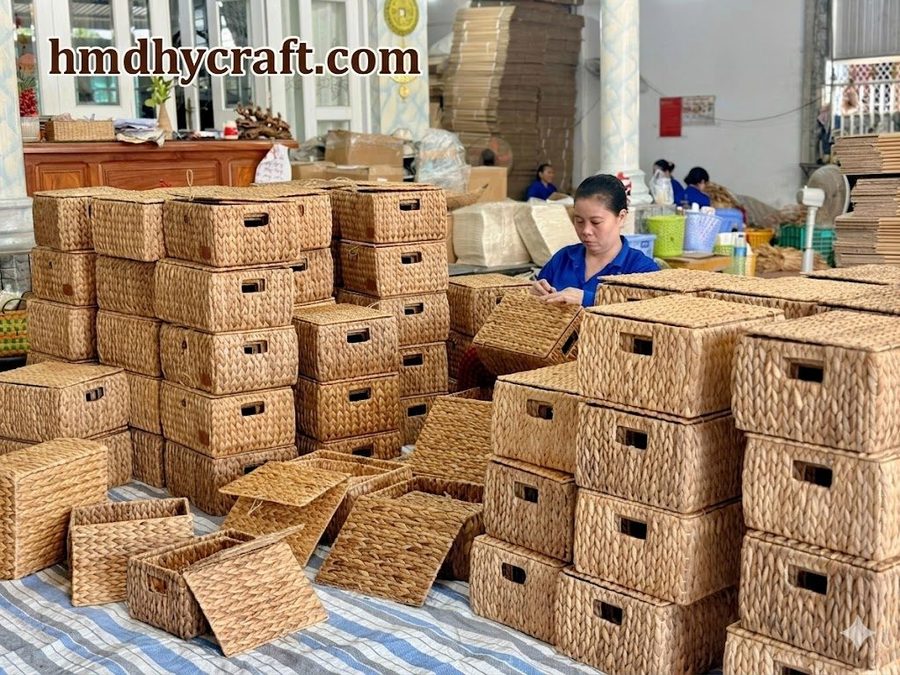
Inside the workshop, one MOQ becomes one weaving batch. A small team of two to four artisans is allocated to that batch for the full production window (typically three to five weeks depending on complexity). The team learns the pattern, sets up the shape jig, weaves the first ten to twenty pieces under close QC, adjusts, and then produces the remainder at a steady rate. Once the run finishes, the team is reallocated to the next batch, and the jig is broken down and put back in storage.
Everything about MOQ economics flows from that setup-and-teardown cost. It is not the raw fibre that makes small runs expensive; water hyacinth is one of the cheapest raw materials in Vietnamese export handicraft. It is the artisan time spent on the first ten pieces, the QC time spent teaching the team the buyer's specific finish, and the jig time spent making the shape reliable. Below a certain volume, those fixed costs blow up the per-unit price.
The 300-piece floor and why it sits there
HMD's standard MOQ for a wholesale programme is 300 pieces per SKU per colourway. That number is not aspirational; it is the point on the cost curve where the workshop can quote a wholesale FOB price the buyer will accept. Some background on how 300 became the working floor across most of the Vietnamese natural-fibre export sector:
- Setup absorbs the first two to three days of the run. A four-artisan team weaving a new SKU spends roughly 18 to 24 person-hours on pattern instruction, first-piece QC, and jig calibration before the production cadence stabilises. That fixed cost is amortised across the full run.
- QC time scales with SKU complexity, not with volume. A senior QC inspector spends the same three to four hours reviewing a new SKU's first samples regardless of whether the run is 100 pieces or 1,000. Below 300, that inspection cost distorts the per-unit price by 8 to 12 percent.
- Cooperative capacity is planned in batch weeks, not in pieces. A cooperative allocates a two-to-four week window per SKU. Filling that window with a 150-piece run instead of a 300-piece run means the workshop earns half the revenue for the same block of capacity, and a competing buyer with a 400-piece SKU has to wait.
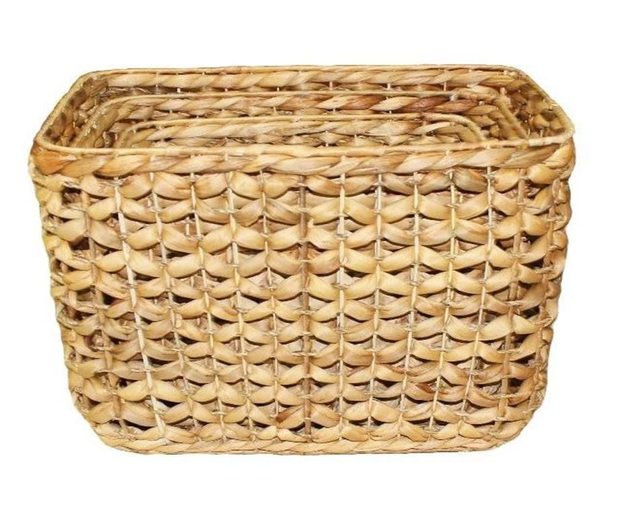
- Container packing efficiency wants batch consistency. Nested storage baskets pack in cartons of 4, 6, or 8 sets. Small orders that do not fill a full carton multiple ship in mixed cartons, which slows load planning at HCMC.
Below 300 pieces per SKU, HMD quotes a small-run surcharge or asks the buyer to combine SKUs into a single batch (see the mixed-container tactic below). Above 300, standard wholesale pricing applies and price improves in modest steps at 500, 1,000, and 2,500 pieces per SKU.
What pushes MOQ above 300
The 300-piece floor assumes a design HMD already produces regularly, in an existing colourway, at standard dimensions. When the specification moves away from that baseline, MOQ moves up.
| Specification change | Typical MOQ | Why |
|---|---|---|
| Standard existing SKU, standard colour | 300 pieces | Baseline; no setup beyond batch initiation |
| New custom size on existing shape family | 500 pieces | New shape jig required; two to three weeks jig lead time |
| New custom colour (dyed, washed, or lacquered) | 500 pieces | Dye batch minimum + first-piece colour approval round |
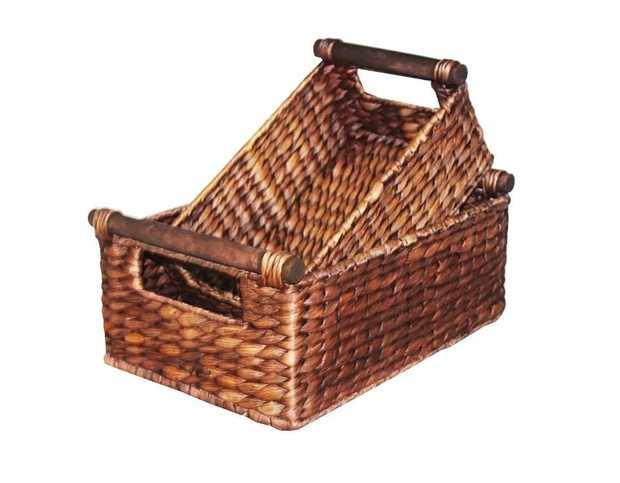
| Metal-frame or iron-handle construction | 500 to 800 pieces | Frame supplier has their own MOQ; welding fixture setup |
| Fully custom design (new shape, new construction) | 1,000 pieces | Full development cycle: three sample rounds, new jig, new QC checklist |
| Private-label labelling only (existing SKU + buyer's hangtag) | 300 pieces | No production change; hangtag is a packing-line task |
| Full private-label packaging (custom carton, custom insert) | 500 pieces | Carton printer's own MOQ; artwork approval cycle |
Two specification changes together stack, they do not average. A custom size in a new colour with a metal frame will quote at 800 to 1,000 pieces MOQ. That is not the workshop being awkward. It is the compounded setup cost of three separate development streams.
Four negotiation moves that actually work
MOQ is not up for direct negotiation. Trying to talk the workshop down from 300 to 150 on a first order almost always fails, and even when it succeeds it produces a slower delivery and a fussier QC round. The moves that work are structural. They change the shape of the order so the workshop's economics stay whole while the buyer gets what they wanted, which is usually variety on a first order rather than raw volume reduction.
Move 1 — Mixed container with per-SKU MOQ
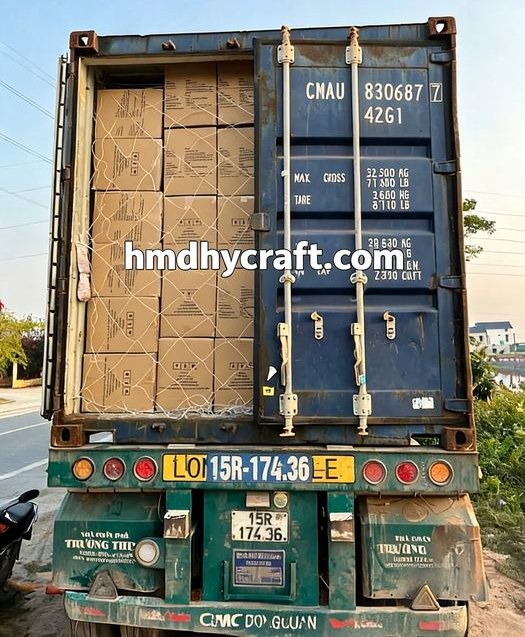
The single most useful move. Instead of asking for 100 pieces of one SKU (below MOQ), order 300 pieces each of five different SKUs and consolidate them into one 40-foot high-cube. Each SKU meets MOQ at the workshop level. The container hits a comfortable partial load. The buyer gets shelf breadth on the first order and can test which SKU sells through before committing depth on the re-order. HMD ships almost every first-time programme this way.
Move 2 — Add a repeat SKU to a new run
If a buyer already runs one HMD SKU on repeat, adding a new SKU at 300 pieces to the same container is much easier than starting a new supplier. The freight cost is already committed; the container consolidation is already scheduled; the new SKU just slots into the existing workflow. Buyers who plan their re-orders around trying one new SKU per container get variety over time without ever paying the small-order tax.
Move 3 — Commit to a 12-month re-order pattern
A written commitment to place four repeat orders of the same SKU over 12 months (typically 300 pieces per quarter) lets the workshop plan capacity in advance and hold the shape jig on the floor rather than dismantling and rebuilding it each time. In exchange, HMD can quote the first order at 300 pieces MOQ without a small-run surcharge and hold the FOB price flat across the four orders. This works particularly well for e-commerce private-label brands with predictable sell-through.
Move 4 — Split a single design across two colourways
If a buyer wants 300 pieces of a design in two colourways (say brown wash and natural), that is technically two MOQs of 150 each, which normally would fail. But because the shape jig and pattern instruction are shared across the two colours, the workshop can run them as one 300-piece batch with a colour changeover partway through, and quote them at the equivalent of a single 300-piece MOQ. This is a request the buyer has to raise explicitly; it does not happen by default.
What NOT to ask for
MOQ under 100 pieces on a wholesale programme. Below 100 the run is a sample round, not a production order, and pricing is not comparable to wholesale. Buyers testing a design at that scale should order finished samples, review them, then commit to a proper first order.
Different MOQ per country of destination. Some sourcing agents propose splitting one production run into small parcels for different countries. The workshop still runs one batch; the fragmented packing and paperwork add cost and delay without helping anyone.
Ex-stock inventory pull for new SKUs. HMD does not hold buyer-facing inventory in Vietnam. Every SKU is woven to order. Buyers used to Chinese suppliers holding warehouse stock need to adjust the planning cadence: eight to ten weeks lead time in, not two.
Sample orders and how they fit the MOQ conversation
Every serious buyer starts with samples. HMD ships one to three finished samples per SKU by DHL from HCMC within seven to ten working days of order confirmation. The samples are pulled from ongoing production runs where possible; where the exact spec does not exist in production, the sample is woven fresh, which adds two to three weeks.
Sample cost is charged at unit price plus a small handling and courier fee. Where the buyer places a production order above MOQ within 90 days of receiving the sample, HMD credits the sample unit cost back against the production invoice. Courier and handling fees are not credited.
Samples are the single fastest way for a merchandising team to resolve a specification question. Watching two versions of a proposed SKU in the buyer's own showroom typically resolves 80 percent of the "which finish should we pick" discussion in about ten minutes. Trying to resolve it on Zoom with photographs almost never works.
How MOQ interacts with FOB price
Buyers frequently think of MOQ and unit price as two separate negotiations. They are one negotiation. The workshop quotes a FOB price band that assumes the standard 300-piece MOQ; ordering 500 or 1,000 pieces per SKU pulls the unit price down in step. The typical step is 5 to 8 percent between 300 and 500 pieces, and another 4 to 6 percent between 500 and 1,000. Above 2,500 pieces per SKU the curve flattens: fibre and labour are already close to their true cost floor, and further volume mostly buys freight economics rather than production savings.
For most first-programme buyers, HMD recommends holding the first order at MOQ across a wider range of SKUs rather than pushing volume on any single SKU. That preserves flexibility to drop a slow-mover on the re-order without wasted inventory, and the sell-through data from the mixed first shipment is worth more than the 5 to 8 percent unit-price saving a bigger first bet would have earned.
MOQ is not the number to negotiate. The container mix is.
Once a first order lands and sells through, MOQ conversations get much easier. HMD holds repeat SKU pricing flat for 12 months against a written commitment, and repeat MOQ can drop to 150 to 200 pieces on a top-up run if the container has room. The relationship compounds. The first order is the only place where the MOQ friction is real; from the second order onward, it is a scheduling problem, not a pricing problem.
Frequently asked questions
What is a typical MOQ for water hyacinth baskets from Vietnam?
300 pieces per SKU per colourway is the standard wholesale floor at HMD. Custom designs, new tooling, or metal-frame constructions typically move that to 500 per SKU. First orders below 300 are quoted as sample runs with a small-run surcharge.
Why is MOQ 300 and not 50?
Below 300 pieces, the workshop's setup time (pattern instruction, jig calibration, first-piece QC) is longer than the productive weaving time. The buyer either pays a higher per-unit price to cover that setup or the workshop refuses the run. 300 is where economics become sensible for both sides.
Can I get below MOQ for a first sample?
Yes, for sampling only. HMD ships one to three finished samples per SKU for buyer review before production. Sample cost is credited back on a first production order above MOQ placed within 90 days.
How do I get variety without ordering 300 of every design?
Consolidate a mixed container. Order five SKUs at 300 each into one 40-foot high-cube. Each SKU meets MOQ at the workshop; the container fills comfortably; the buyer gets breadth on the first order and can test sell-through before committing depth.
Does MOQ change for repeat orders?
Repeat orders on the same SKU carry no setup cost, so MOQ can drop to 150 to 200 pieces on a top-up run if the container has room. Planning the repeat as part of a container that also includes new SKUs is the most economical pattern.
What if my design needs a custom size?
Custom sizes add two to three weeks for shape jig work plus one production sample round. MOQ on custom-sized SKUs is 500 pieces to amortise the jig cost. Above 1,000 pieces, the per-unit price benefit from the longer run typically offsets the jig cost fully.