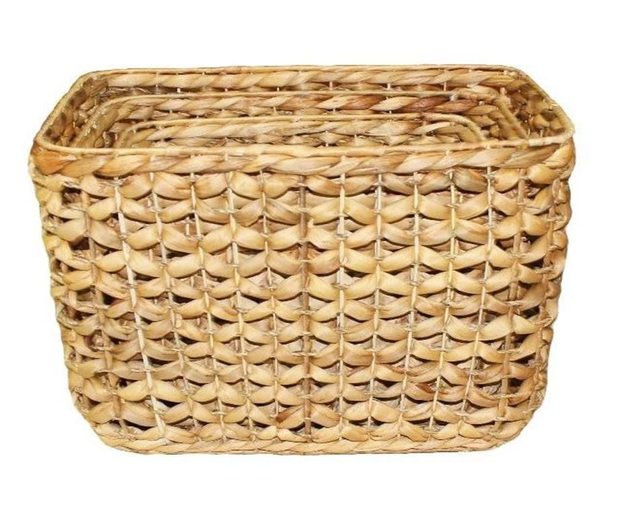
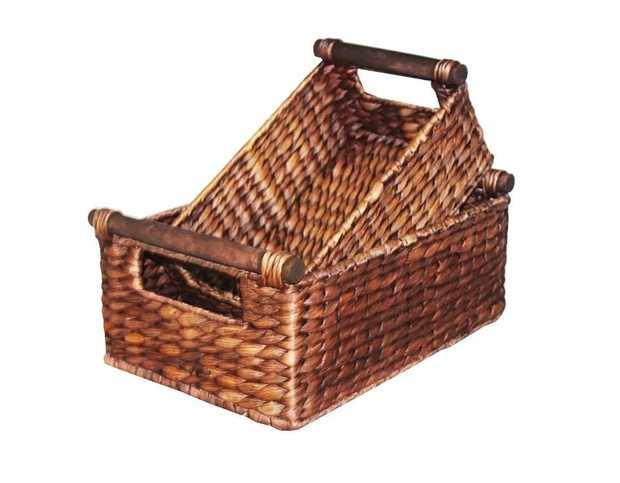
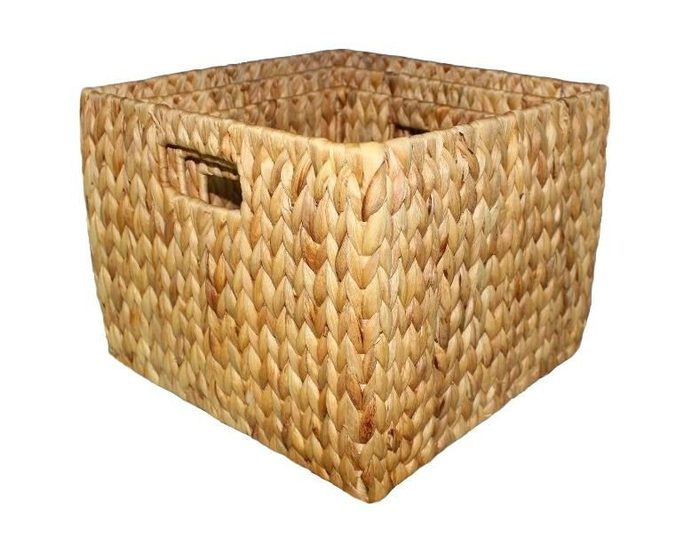
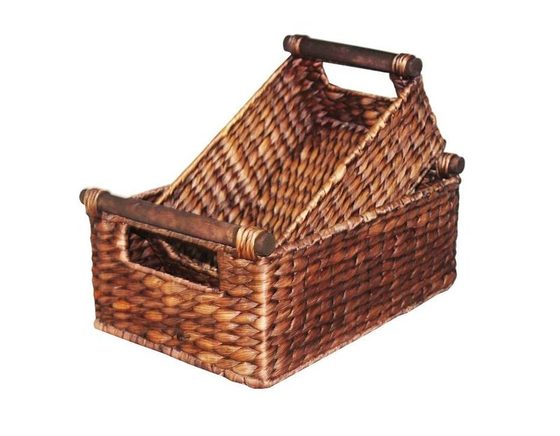
Handwoven water hyacinth is one of the most forgiving natural fibres in the retail category, but "forgiving" is not "invulnerable". A basket that spent 40 days at sea inside a well-vented container will outlast the buyer if it is stored above 65 percent relative humidity in a coastal DC for six months. This guide covers what the retailer needs to know for the warehouse leg, what the buyer's shopper needs to know for the living-room leg, and what to do if a mould spot appears anywhere along the way.
Written for wholesale buyers, DC operations managers, and retail merchandising teams handling handwoven water hyacinth baskets between arrival at destination port and the shopper's home. The instructions apply equally to seagrass and coarser natural-fibre baskets from Vietnam, with the humidity thresholds shifted slightly (seagrass tolerates one to two percentage points more RH).
Humidity is the number that matters
Water hyacinth is dried cellulose. Its fibre resting moisture content out of the workshop is 8 to 12 percent water by weight, achieved through three to five weeks of sun-drying in the Mekong Delta. Fibre held below that moisture content splits and becomes brittle; fibre held above 16 percent supports mould growth. The gap between "safe" and "developing a fungal bloom" is roughly six percentage points of moisture, which in warehouse terms is the gap between 60 and 75 percent relative humidity.
| Storage RH | Safe duration | Risk profile | Action |
|---|---|---|---|
| Below 55% | Indefinite | Fibre may become brittle over 12+ months | No active mitigation needed |
| 55% to 65% | Indefinite | Optimal storage range | No active mitigation needed |
| 65% to 75% | Up to 8 weeks | Mould risk within 4-6 weeks on stagnant stock | Rotate stock, ventilate cartons |
| 75% to 85% | Up to 3 weeks | Visible mould possible within 2 weeks | Move to lower-RH zone, add desiccants |
| Above 85% | Not safe | Mould visible within 5-10 days | Do not store; move to climate-controlled area |
Most retail DCs in the UK, Northern Europe, and inland US sit naturally in the 45 to 60 percent RH band year-round, which is comfortable. DCs in Florida, coastal Texas, Southern Spain, coastal Australia, and Southeast Asian markets frequently run above 70 percent for weeks at a time during monsoon or summer humidity. Those buyers benefit most from stock rotation discipline (FIFO by container B/L date) and from siting the basket stock away from external walls.
Every HMD container ships with a small anti-mould paper sachet (calcium chloride desiccant + fungicide film) in each carton, sized for the carton volume. The sachet retains active protection for approximately 90 days at up to 70 percent ambient RH. Buyers holding stock beyond 90 days in warm-humid conditions should replace the sachets or transfer cartons to a lower-humidity zone.
Warehouse handling — the eight rules that prevent 90 percent of problems
- Store off the floor. Cartons in direct contact with a concrete DC floor wick moisture upward within days. Pallets, wire racking, or plywood risers under the bottom row eliminate the risk. This is the single most common cause of preventable moisture damage in first-time basket buyers.
- Keep cartons off external walls. The wall-facing side of a carton stack against a north-facing DC wall in winter, or a west-facing wall in summer, sits three to five degrees warmer or cooler than the interior air and condenses moisture. Leave 30 cm clearance between stack and wall.
- Ventilate the stack. Do not shrink-wrap full pallets of basket cartons. The wrap traps residual carton humidity from the ocean leg. If pallets must be wrapped for handling reasons, remove wrap within 48 hours of DC arrival.
- Rotate FIFO by B/L date. Every carton is labelled with the container B/L reference. Older containers ship out first regardless of SKU sell-through velocity. This prevents the oldest stock ever accidentally becoming the last stock in the DC.
- Do not double-stack past six carton heights. Water hyacinth cartons are strong to about six-carton stacking. Above that, the bottom carton walls collapse under load, deforming the baskets inside. Stack seven cartons only if the top carton contains a lighter SKU.
- Inspect the top carton per stack weekly. A random weekly visual inspection of the top carton in each stack catches the earliest signs of humidity, dust build-up, or pest activity. Ten minutes a week saves entire pallets from write-off.
- Isolate any stock arriving with visible dampness. Damp cartons at container unload (typically caused by a leaking container ceiling or a wet trailer at destination) need to be isolated, opened, and air-dried before returning to shared storage. Do not stack damp cartons on dry ones.
- Track humidity year-round. A single hygrometer in the basket storage zone, checked weekly, catches seasonal shifts before they cause damage. Digital hygrometers with data-logging cost under $30 and pay for themselves the first time they warn of a monsoon-week RH spike.
Cleaning method — for the DC, the retail shop floor, and the shopper
Water hyacinth baskets clean easily provided the shopper (or the retail merchandiser) does not treat them like a hard surface. The instinct to reach for a spray bottle of surface cleaner is the single most common cause of stained fibre.
Routine cleaning (weekly to monthly)
Vacuum with a soft brush attachment. Move the brush in the direction of the weave, not against it. This lifts surface dust from the weave gaps without pulling at the fibre ends. Ten to twenty seconds per basket is enough. This is also the standard shop-floor merchandiser routine in retail stores that keep display baskets on the sales floor for extended windows.
Spot cleaning (when a mark appears)
Dampen a microfibre cloth with lukewarm water and a small drop of mild dish soap. Wring the cloth until it is barely damp — no dripping. Blot the mark, do not rub. Follow with a second cloth dampened with plain water and blot again to lift any soap residue. Allow the basket to air-dry in ventilated shade for four to six hours before returning to service. Never allow water to pool inside the weave.
What not to use — ever
- Bleach or ammonia-based cleaners. Both react with the natural cellulose, causing permanent yellowing or grey mottling that no subsequent treatment can reverse.
- Furniture polish or wood wax. Water hyacinth is not wood. Wax builds up in the weave, attracts dust, and darkens the natural colour over months.
- Steam cleaners. Steam drives moisture deep into the fibre and creates a warm humid interior perfect for mould.
- Machine washing. Water hyacinth is not textile. The weave loosens and the shape collapses on the first cycle.
- Direct water spray or hose. Applies to any water hyacinth basket, indoor or outdoor. Saturated fibre takes 24 to 48 hours to dry in ideal conditions and can mould overnight in humid conditions.
Seasonal storage — when the basket is between uses
Retailers with seasonal SKUs (holiday hampers, Easter baskets, summer picnic sets) often need to store a proportion of stock for six to nine months between selling seasons. The storage protocol is the same as year-round DC storage, with two additions.
First, if the basket is being stored in its original retail carton, re-open the carton, remove any decorative liner or filler that came with the original merchandising, and let the carton air out for a week before resealing for long-term storage. Decorative liners (particularly synthetic or foam-backed liners) can trap humidity against the fibre.
Second, add a fresh anti-mould sachet to each carton at the start of long-term storage. The sachet from the original HMD packing has probably expired if the basket has been in retail rotation for six months. Fresh sachets from any DC packaging supplier work fine; the specific chemistry does not matter as long as the sachet is rated for cellulose-fibre storage.
Retail care card — copy the buyer can print onto the SKU tag
Care card copy (for hangtag or paper insert)
To keep your handwoven basket looking beautiful for years:
Indoor use only. Keep away from direct water, rain, and prolonged direct sunlight.
Vacuum weekly with a soft brush attachment. For marks, blot with a barely-damp cloth and mild soap; never soak.
Store in a dry, ventilated place. If the basket becomes damp, let it air-dry fully before use.
Handmade by artisan weavers in Vietnam from responsibly harvested water hyacinth.
Retailers running a returns-driven category should include this text on a paper insert inside the packed basket, or printed onto the underside of the hangtag. Data from three HMD private-label buyers over 2024-2025 shows a 40 to 55 percent reduction in end-customer returns tagged as "damaged / broken" once a care card is included on the retail SKU. The most common misuse driving returns is water contact (indoor plant pot without a saucer, bathroom placement with steam exposure) — the care card directly addresses both.
HMD will include a printed care card in every retail SKU on request. Buyer-branded cards are printed at no additional cost above 500 pieces per SKU; below that, generic English-language care cards ship by default and add nothing to the unit price.
What to do if mould appears
Mould on a basket looks like a small greyish, greenish, or white fuzzy patch, usually starting where the weave is densest or in a corner where air circulation is lowest. If caught early, the basket can be fully recovered. Left for weeks, mould reaches the interior of the fibre and the basket becomes a write-off.
- 1.Isolate the basket. Mould spores travel. Move the affected basket at least three metres from any other basket stock and open a window or turn on a fan.
- 2.Brush the mould spot outdoors. A stiff-bristle brush lifts the surface growth. Do this outside, wearing a dust mask, so you are not spreading spores indoors.
- 3.Wipe with a 3:1 water-and-white-vinegar solution. Dampen a cloth, not the basket. Wipe the treated area and immediately dry with a clean cloth.
- 4.Sun-dry for four to six hours. Short direct-sunlight exposure kills residual mould spores through UV and drives interior moisture out. Do not exceed one afternoon of exposure — longer sunlight bleaches the natural colour visibly.
- 5.Store separately for two weeks before rejoining shared stock. A recurrence check period. If no new spots appear, the basket is safe to return to the general storage zone.
If the mould covers more than about 10 percent of the basket surface, or the affected area is soft to the touch (indicating interior fibre breakdown), the basket cannot be recovered and should be written off. Do not try to salvage a heavily-mouldy basket by discounting it for retail sale; the smell alone will drive customer complaints.
Humidity today is the mould in six weeks. Everything else is a footnote.
Every serious care problem this category ever has ends up being a humidity problem. Fibre choice, weave density, dye chemistry, container packing, retail merchandising — all of it matters, but none of it matters as much as whether the basket sat above 70 percent RH for a fortnight while nobody was watching. Track the humidity. Rotate the stock. The rest follows.
Frequently asked questions
What humidity level is safe for water hyacinth baskets in a warehouse?
Below 65 percent RH is the practical safe zone for long-term storage. 65 to 75 percent tolerates short-term storage with active air circulation. Above 75 percent, mould risk becomes material within four weeks.
How do you clean a water hyacinth basket?
Vacuum with a soft brush attachment. For spot cleaning, use a barely-damp microfibre cloth with mild soap; blot, do not rub. Never soak, never machine-wash, never bleach.
Can water hyacinth baskets be used outdoors?
No. Water hyacinth absorbs ambient moisture from rain, dew, and outdoor humidity. Even covered porch use accelerates fibre breakdown. Baskets are indoor-only.
How long does a water hyacinth basket last in typical use?
Five to ten years of indoor residential use, longer with careful handling. Structural failure is unusual; the typical replacement trigger is aesthetic (colour fade, dust build-up) rather than structural.
What do you do if a basket develops a mould spot?
Isolate, brush outdoors, wipe with a 3:1 water-and-white-vinegar solution, sun-dry for four to six hours, then quarantine for two weeks before returning to shared stock.
Should I include a care card with each retail SKU?
Yes for retailers targeting a returns rate below 3 percent. A care card typically reduces damage-related returns by 40 to 55 percent. HMD includes one on request; buyer branding is free above 500 pieces per SKU.