Most of this journal is about handwoven baskets, because that is what we were set up for. Buyers keep asking the same question (what else does Vietnam do well, and can we buy it from the same door) so the right answer was to open a second line. This piece is the short version of what that second line looks like, what the two lines share, and where the sourcing logic for frozen food parts company with baskets.
Written for buyers researching whether a one-door Vietnam partner is a real option. Covers where the dry-goods playbook still applies, and where it stops.
In this piece
The two lines side by side
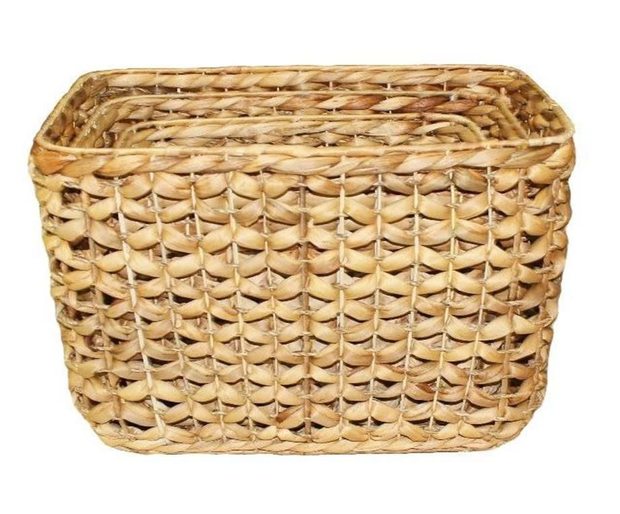
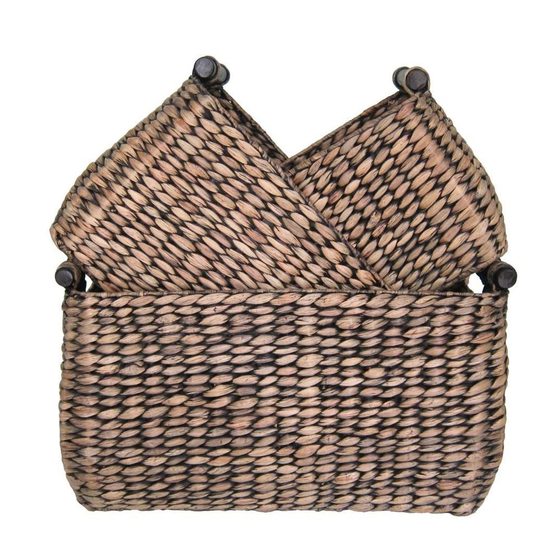
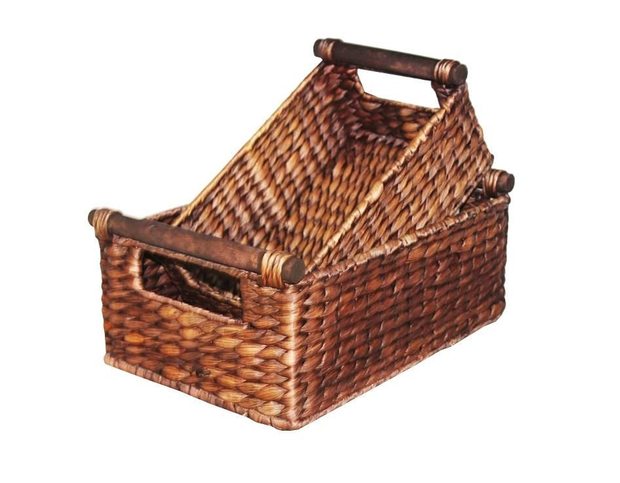
HMD Strategy & Export Co., Ltd runs two brands. HMD Hycraft, the handicraft line, covers handwoven water hyacinth and seagrass baskets, trays, laundry hampers, and planter cachepots from cooperative workshops in Đồng Tháp province. FROKO18, the frozen food line, covers frozen pangasius as the priority programme plus fish cakes, surimi, battered pangasius, and frozen fruit and vegetables. Same company, same director, same approach to the buyer. Separate factory networks, separate cold or dry logistics, separate paperwork.
| Dimension | HMD Hycraft (baskets) | FROKO18 (frozen food) |
|---|---|---|
| Priority category | Water hyacinth and seagrass basketwork | Frozen pangasius raw material |
| Secondary lines | Rattan, bamboo accents, decor | Fish cakes, surimi (10 kg blocks, 2 blocks per 20 kg carton; 1 kg bags for supermarkets), battered pangasius, frozen fruit and vegetables |
| Factory model | Artisan cooperatives, cottage weaving | Registered export processing factories |
| Storage | Dried warehouse, moisture under 15 percent | Cold storage at -18°C, in the -18 to -22°C range |
| Container | 20 ft or 40 ft HQ, dry, ambient | 40 ft reefer, set point at or below -18°C |
| HS code family | 4602 (plaiting materials) | 0304/0305 for fish, 0710/0811 for frozen fruit and vegetables |
| Commercial contact | joy@hmdhycraft.com, WhatsApp +84 938 350 686 | joy@froko18.com, WhatsApp +84 559 904 699 |
| Positioning | Export intermediary, cooperative network connector | Hub source: find sources, work with factories, troubleshoot, keep pricing honest |
The two lines never share a container. They do share a mindset: find the right factory for the brief, keep the commercial door clean, and do the hand-off at loading in writing.
Why one Vietnam door is worth considering
The one-door model is not for every importer. For a buyer with a mature frozen food programme across three countries, adding a Vietnamese line through a basket exporter makes no sense. For a buyer new to Vietnam who is considering two or three categories, the picture changes.
- Fewer first-conversation taxes. The hardest week of any new Vietnamese sourcing relationship is the first one: calibrating response time, communication style, how specs are read. Running that calibration once and reusing it across two categories saves repeat setup.
- One commercial door, one payment workflow. Separate proforma per order, separate B/L per shipment, but the same T/T routing, the same signatory, the same accounting entry on the buyer side.
- Transferable trust. A buyer who has received six basket containers on spec does not have to re-prove the exporter can read a spec. The frozen food side still has to earn its own category trust, but the general operator trust transfers.
None of this is unique to HMD. Several Vietnamese exporters run multi-category setups. The question is whether the specific pair of categories matches what the buyer actually needs.
Dry container vs reefer: what actually changes
Most of what differs between the two lines sits inside the container. The commercial relationship can feel similar; the physical shipment is a different animal.
Container type and temperature
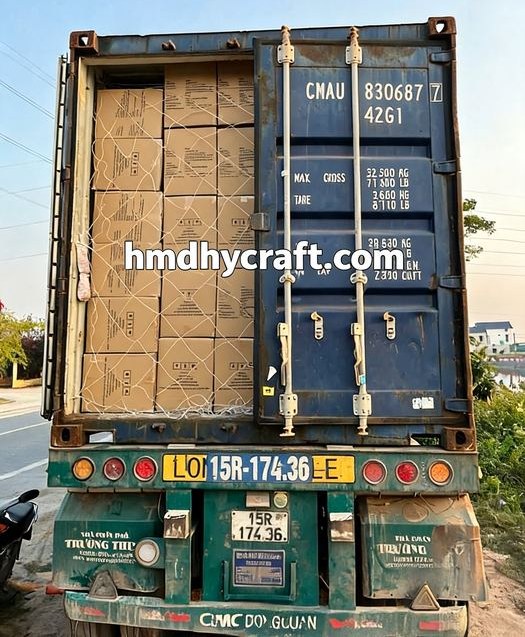
Baskets ship in a dry 20 ft or 40 ft HQ. Temperature inside the box tracks ambient and nobody logs it. Frozen food ships in a 40 ft reefer with the set point at or below -18°C, continuously logged by the container's own data logger from stuffing to destination. A reefer failure mid-voyage is a different class of problem from a dry container that gets wet.
Pre-loading inspection
On baskets, the pre-shipment inspection is visual: weave, dimensions, finish, moisture, hangtag artwork. On frozen food, add core temperature. Each pallet is spot-checked with a probe before stuffing; if the core reads warmer than the spec, the pallet goes back to cold storage and the loading plan slips. The visual check still happens (packaging, master carton labelling, best-before date on the primary) but the temperature number is what gates the load.
Transit, timing, and the clock
A dry container of baskets to Rotterdam or Felixstowe is a 28 to 35 day voyage; a delay of three days is annoying, not fatal. A reefer load has the same voyage length but the clock is less forgiving because the whole load depends on the plug staying on and the gen set staying fuelled during trans-shipment. Lead time on the production side also runs differently: frozen food production is tied to harvest and processing windows, not weaving season.
Documents the dry side does not need
Baskets travel with a commercial invoice, packing list, Certificate of Origin, phytosanitary certificate, and B/L. Frozen food adds food safety authority paperwork (details vary by destination; your customs broker is the right source for the specific list), temperature logs, and in some corridors a health certificate from Vietnam. On fish, the catch and processing records live upstream at the factory and the exporter pulls them together into the shipment file.
What this means for a first FROKO18 enquiry
Send the same six-field intake you would send on baskets, with one addition: name the destination country and port, and ask Joy to confirm the import documentation the destination customs authority expects. We will not fabricate a chapter of import rules we are not qualified on. We will tell you what the Vietnam-side paperwork looks like and recommend you cross-check destination requirements with your local customs broker before the first PO.
What transfers from basket sourcing to frozen food
More than most importers assume. The parts of a Vietnamese sourcing relationship that are category-agnostic:
- Consolidation at the exporter side. The buyer sees one commercial contact, one proforma, one PO workflow. Underneath, the exporter coordinates factory, forwarder, and stuffing. On frozen food this coordination is more time-sensitive but structurally identical.
- Pre-production sample as the gate. On baskets, the sample locks weave, dimensions, finish, hangtag. On frozen food, it locks fillet size, cut, glaze percentage, pack weight, master carton labelling, best-before format. FROKO18 ships free samples under 2 kg; the buyer covers freight. Principle is the same: approve in writing, then start.
- One point of contact for problems. Wrong hangtag colour, moisture higher than spec, a damaged pallet, a temperature deviation flag: the buyer talks to one person. The problem may need factory escalation underneath, but the buyer-facing interface stays single.
- Clear hand-off at loading. Photos and video of stuffing. For reefer, add pre-cooling time, set point confirmation, and the data logger serial number noted in writing.
What is completely different
Four things do not transfer at all:
- The physical cold chain. From fillet freezing on the processing line, to chilled truck, to cold storage, to reefer stuffing, to vessel plug, to destination cold storage. Any break degrades the product. No equivalent on handicraft.
- The seasonal rhythm. Baskets run on a 45 to 60 day cycle driven by weaving-village capacity. Frozen food runs on harvest windows for fish and growing seasons for fruit, which do not align with handicraft peaks.
- The food safety authority dimension. On baskets, destination customs cares about HS classification, origin, biosecurity. On frozen food, add the food safety side (FDA, FSA, BVL, DAFF, depending on destination). Rules change: ask a destination-market customs broker to confirm.
- What combines in a single container. On baskets, mixed SKUs in one 40 ft HQ is routine. On frozen food, fish combines with seafood but not fruit, and durian ships alone. See the companion piece on cold-chain basics for the mechanics.
Who the one-door model fits (and who it does not)
| Buyer situation | One-door model fit |
|---|---|
| Already runs a HMD basket programme, exploring Vietnam frozen food for first time | Strong fit. Reuses operator trust, saves setup. |
| Multi-category importer new to Vietnam, considering 2+ product lines | Worth testing on one small order per line. |
| Established frozen food buyer with three-country supply base | Marginal fit. Likely cheaper to deal with a specialist frozen food exporter directly. FROKO18 still worth a quote for the Vietnam pangasius programme on its own merit. |
| Buyer under $20K annual on each line | Direct exporter per category is usually simpler at small scale. |
| Buyer with retailer compliance requiring specialist category expertise | Verify the specialist expertise exists on the second line before combining. Specialist expertise matters more than door-count. |
None of these is a sales pitch. They are the honest filters a buyer should run before deciding to centralise two categories through one exporter.
One door does not mean one container. It means one phone call and two shipping files.
Buyers sometimes expect that a one-door model collapses two operational flows into one. It does not. The commercial door is one; the physical shipment files, the two factory networks, the two sets of documents, and the two containers stay independent. What the model saves is the overhead of running two first-time Vietnamese relationships from a cold start.
Frequently asked questions
What is the one-door sourcing model HMD runs between baskets and frozen food?
Same company, same director, two export brands. HMD Hycraft for handwoven baskets, FROKO18 for frozen food. One commercial contact, two separate factory networks, two separate shipments.
Why would an importer want one Vietnamese source for both baskets and frozen food?
Fewer first-conversation taxes, one payment workflow across both proforma, and transferable operator trust. Only worth it when the buyer actually needs both categories.
What is the biggest difference between sourcing dry handicraft and frozen food from Vietnam?
The cold chain. Baskets ship dry at ambient temperature; frozen food ships in a reefer at -18°C or colder with continuous temperature logging and core-temperature checks before loading.
Does HMD own the factories for either line?
No. HMD is a trading export company on both sides. Baskets go through cooperative workshops; FROKO18 is a hub source working with registered export processing factories.
Can I run both lines on the same purchase order or container?
No. Different container type, temperature, documents, and often different ports. Separate PO and separate B/L per line. What you share is the commercial contact.